
#EndOurCladdingScandal
#BuildingSafetyCrisis
manchester.cladiators@gmail.com#BuildingSafetyCrisis
By Georgie Hulme
Credit to Greater Manchester Housing Action who originally posted this article in their blog:
http://www.gmhousingaction.com/disabled-leaseholders-fire-safety/
Since the horrendous Grenfell tragedy, more and more buildings are being identified nationwide as unsafe due to various fire safety defects. The main issue is cladding, but the problem goes much further than this.
Nobody should be living in buildings with major fire defects, and no leaseholder should have to pay for such remedial works. This scandal has shown the problems of successive Governments in failing to address building safety standards. Greater Manchester has the highest amount of buildings at risk compared to the national average. The last count I heard from the Fire Service a few weeks ago was 88, and it's potentially even more now.
It’s really positive that media across the political spectrum are covering this scandal, and it's powerful to read and hear so many personal stories. But one group who I haven’t heard or seen being involved are those with conditions and/or are disabled leaseholders. I am a disabled leaseholder and of course we are not all in the same situation, but we do exist. It’s important that all groups and circumstances are reflected, because as things are, the Government gives the impression that all leaseholders are in positions to access loans to cover costs. It’s important to note that all these properties have no market value as a result.
Here’s a bit about myself and my situation. My name is Georgie. I’m a leaseholder living in the Life Buildings in Hulme, Manchester. The buildings have major fire risks, including unsafe cladding, compartmentalisation issues and unsafe timber/decking on balconies. It was built unsafe. The developers went bankrupt, so we have no recourse to challenge them. We have no indication that the freeholder is likely to cover any required costs.
I really love my flat, the location and the community, but I am stuck in a building that’s extremely unsafe, with no options, other than to wait and see what happens. As things are, realistically it’s not going to be a positive outcome.
My Mum died in comfort, thinking that despite my complex disabilities, combined with austerity, she’d left me with home security for life, in an accessible flat that I love. It’s heartbreaking that’s not the case. This situation wasn’t her fault and it isn’t mine. Even though I miss her so much, I’m relieved she isn’t having to go through this. She lived in the flat before me. She was a pensioner reliant on state benefits, who had MS and she died of multiple cancers. Imagine being in such a situation, with this then hanging over you? Of course, there will be people who are.
Daily I feel sick and stressed — the impact on my physical and mental health is extremely detrimental. Bills of tens of thousands of pounds may arrive any day. My income is state benefits, so how could I even be granted a loan of such a potentially large amount? We have no indication of an estimated cost or how and when we will be billed. I’ve heard about bills of between £20,000-£115,000, per flat, often payable in short timescales. Can you imagine living like this, especially during the coronavirus crisis and lockdown. Hundreds of thousands of us have had no choice.
How many more fires and deaths until the Government will act to safeguard all in this situation? All residents were asked on safety grounds to clear balconies and to keep them sterile. Does it make me feel safer? No, but that I’ve started packing before eviction.
The Building Safety Fund, whilst welcome, falls massively short. Only covering cladding costs for buildings 18 metres and above, means that numerous buildings, like the block I live in, which is 16.8m, will receive no financial assistance at all. Why are we deemed unworthy of any help? Why are our lives viewed as unequal? Fire does not discriminate height-wise. So whilst an application has been made, it is extremely unlikely that we will be granted any funding, even though we’ve been assessed under the same criteria as those eligible. Also, what about other fire safety costs, some I’ve mentioned above, that also include mass insurance hikes and required specialist reports?
It’s not enough for Government Ministers to ask developers and freeholders to do the moral thing and not pass costs to leaseholders. Asking politely is not going to save so many people from huge debts or eviction. I feel sick, anxious, angry, appalled, petrified, and utterly heartbroken. I don’t want to lose my flat. I want more than anything to be able to stay. This is an injustice of immeasurable proportions and the Government is enabling this to continue when the situation could be stopped.
The relaunch of the Manchester Cladiators End Our Cladding campaign, in collaboration with other groups, sets out 10 asks of Government that could end this nightmare. For more information head to the website here.
Our local leaseholder group actively supports this campaign. Whether you are impacted by this scandal or not, I urge people if on Twitter, to please follow, tweet and retweet the main campaign @McrCladiators, @EOCS_Official and our local group @LifeBuildings.
There doesn’t feel much hope around at the moment, but despite the detrimental impact this is having on my health, I have no choice but to fight on in any way I can, when I can, because the alternative is too unbearable to contemplate.
Georgie Hulme is a leaseholder at the Life Buildings in Hulme and a campaigner with the Manchester Cladiators. You can follow the campaign on Twitter at @McrCladiators.
My Dad died eight years ago leaving me with some inheritance money. He died at age 57 from a brain tumour and was sick for 17 months before he passed away. It was the most devastating experience of my life and I know I will never really get over it. I learnt back then how unfair life could be.
My Dad was my hero and the one person in the world that I looked up to the most. He began life with nothing and had worked hard for his money, starting his own business in manufacturing in the North of England that had become quite successful. I was brought up in Warrington and owe my parents for a wonderful childhood and a loving home.
I wanted to make sure that I did something sensible with the money that my Dad left me and make a good investment in my future. I didn’t want to waste the money. I wanted to make a decision that he would be proud of.
I decided to buy a 2-bedroom apartment in the centre of Manchester that I could rent out. I was living abroad at the time and working on my own small travel business. The rent money would help to support me while I focused on growing my little venture.
I did thorough research on areas that were wise to buy in the city and paid a solicitor to do all of the proper checks. I had obviously never bought anything as expensive as this in my life and I was nervous about doing something wrong, especially as I could never get my head around the idea that it was ‘my’ money. I still thought of it as my Dad’s money and felt huge responsibility for that.
I remember taking a week to carefully read over the contract from the solicitor to make sure that I understood everything. In the end I felt sure that I was making a good decision and not squandering my inheritance money on something stupid.
I look back now and wonder if there was any way I could have known the grave mistake that I was making. The money that my Dad worked so hard to pass onto me would be completely wasted.
Due to the new government laws on fire safety following the Grenfell disaster, I am now in a position where I face up to £50,000 charges to make my flat safe. I tell myself that I could not have foreseen this and not to blame myself for making a stupid decision with my Dad’s money. But the worry keeps me awake at night and I suffer greatly from anxiety.
I am 35 years old now and I want to start a family with my partner. I have no income as my travel business was decimated by COVID-19. I was relying on this apartment for my future.
I live with this stress every day. Sometimes it all just seems too much and I wonder how I will cope with the mounting burden that this flat creates for me. However, I know that I am not alone.
This is an ongoing nightmare for thousands of flat owners across the UK and we plead to the government of this country to help us. Hard-working, honest people are in a desperate state as they face financial ruin, bankruptcy and even homelessness.
For those who are actually living in the flats right now, not only do they have the financial stress, but they also have the fear that the building that they live in could be the next Grenfell.
Block Name: The Nile
Block Location: Deansgate, Manchester
Block Stats: 138 Flats
Block Issue: Zinc cladding without horizontal fire breaks, despite the building being over 18m. Also requirement for widespread improvements to pipe and cable penetration firestopping
My Personal Story
My wife and I bought a flat in the river city complex in Central Manchester as our first rung on the housing ladder. About a third of the buildings are covered in zinc cladding. I am a doctor in the NHS, and in early 2018 I had interviews for my registrar training and was allocated to the South Coast. Our flat was duly put on the market, and in the process of being sold when the management company first made us aware of the potential fire safety issues. This caused the sale to fall through in August 2018 and forced us into the position of unwilling landlords – not moving south was not a feasible option. At that time, we were staying in a friend of a friend's spare room, expecting to be able to buy but suddenly faced the uncertainty of renting for a prolonged period. Fortunately, my mother was willing to lend us a deposit so that we could actually have a home and set roots. The management company for the Manchester flat, had proposed some initial works that were compliant with the fire safety recommendations. We paid the £900 for these and were of the understanding that this would draw a line under the issue and were in the process of progressing a sale last summer (2019). However, the government then released further guidance last August which caused that sale to fall through too! We are currently still waiting for certainty of guidance. I have been told that the anticipated costs for the first round of testing to comply with the latest guidance would be 30-40k in total. I am left renting out the flat and losing money as the income doesn't cover the costs (plus the extra tax I have to pay on that income!). My mortgage provider is insisting I change to a buy-to-let mortgage with a 2k product fee, and limited options to change provider in the current circumstances, and I am likely going to lose the £11k in stamp duty I had to pay when buying down south (as it counts as a second home) as I see the prospect of selling the Manchester flat within the 3 year time frame increasingly unlikely. And that is before we consider if the leaseholders are going to end up paying more too. I am well aware that my situation is not as stark or grim as many, however the unforced uncertainty and constant financial worries are certainly a psychological drain and never far from my thoughts. It certainly impacts on our decision about starting a family as we have such financial uncertainty. It is especially frustrating when the NHS recruitment structure can enforce moving regions on you and there isn’t much you can do about it!
Block Location: New Islington, Manchester
Block Stats: 60 flats, 6 floors
My Personal Story
I set myself a goal at age 25 that I would own my own property by 30. For 4 years I channelled all my energies into saving enough for a deposit to buy myself a city centre apartment. I spent months trying to find a place that I loved, and I instantly fell in love with Albion Works. After months of trying I finally got my offer accepted and I was unbelievably proud.
I spent the first year making the flat my home and making some great memories in it. It was a dream come true!
I remember watching the tragedy of Grenfell unfold thinking I cannot believe that in this day and age we are allowing fellow human beings to live in properties that are so highly unsafe. I thanked the lord that my property, which at the time felt like a safe haven, was keeping me safe.
Fast forward to 2019 when we received an email about the fire safety issues in my building. At first the communication around the issue was so full of technical jargon that nobody really understood exactly what was going on. Leaving myself and my neighbours confused and anxious for what was to come.
A year later the building has still not been touched and investigations are still going on. We are constantly being drip fed additional issues in the building that have now been deemed unsafe; Cladding, wooden walkways, balconies, compartmentation, and the fire alarms. A waking watch has now been implemented in our building. We are having to watch men walk around our buildings carrying air horns in case of a fire.
I feel sick every time I receive an email from RMG. I worry if it is going to be another issue to add to the list of safety concerns or a huge lifechanging bill. Not only are we living in fear that our entire building is unsafe, we are also living in fear of the increasing costs that are going to come our way. The waking watch alone is costing £10K a week. I have been so sensible with money my whole life, and now I am potentially facing a lifetime of debt. It’s a sickening thought.
At a time when we all just want to get out of this unsafe building, we are all trapped. Our properties are valued at £0 and are completely unsellable. We are prisoners in our own unsafe homes. This issue has consumed our lives for the last year and with the increasing list of safety issues and the looming bill it looks like its going to continue to do so.
We are helpless without the government's backing. How has it come to this?
We are thankful for the Building Safety Fund of £1bn announced by Rishi Sunak in the recent budget. However we know that it will not be nearly enough. Robert Jenrick, Chris Pincher and the Ministry of Housing Communities and Local Government must start to relieve the burden TODAY (and buy some goodwill) by:
The problems that leaseholders face are both financial and life threatening, but also the problems are diverse. They do not just relate to combustible cladding, but to other fire safety issues as well, such as compartmentation, unsuitable inhibition of fire spread, absence of cavity barriers; the list goes on. These problems can be extremely costly to rectify, and very often the problems existed at the time that our buildings were built, and signed off by the building control officers authorised to measure building standards against regulations set by the Government. The problems that are now being unveiled have not been created by leaseholders, and yet they are still being expected to pay. The developers, freeholders, manufacturers of shoddy goods and insurance companies are getting off scot-free. This is not just. Consequently, our fight goes on and we need your support. Please contact us using the Contact page on this site, or e-mail manchester.cladiators@gmail.com.


Block Name: Imperial Point
Block Location: Media City, Salford Quays
Block Stats: 116 Flats
My Personal Story
My name is Julie Taylor and I am co-ordinating the campaign for Imperial Point leaseholders who have been informed the costs to replace insulation on our building will be passed down to leaseholders by the Landlord (Peel L&P). We have established a cladding task force consisting of 6 members with £1000 in funding from residents and we are working on a proactive media campaign to put pressure on the Landlord (Peel Holdings – L&P), the developer (Orbital) and the builders (Lease Lend) to pay for the remedial works as we bought our properties in good faith.
Peel Holdings and Emerson Service Management Company withheld the information from residents regarding the non-complaint cladding for over 16 months after they became aware of the situation. The cost estimate at the moment for the remedial cladding work is anything from £1.0 to 1.5 million to rectify the situation based on works assessed on similar buildings. The Water Gardens development is also planned to extend the commercial aspect of the Lowry Mall into more bars and restaurants. Ironic seeing this proposed development that is attached to Imperial Point will increase the footfall of the general public into building area that poses a fire risk.
We also had a near miss with a fire incident on the 4th floor of the building that could have been so much worse if residents had not acted quickly to extinguish the flames. The photo below is from the resident on the 3rd floor balcony below that raised the alarm.

I bought my first apartment in Imperial Point off plan in 2002 and bought a second apartment in 2012 for my parents to retire in. I am now 57 years of age and planned to retire at 60yrs, but this will now have to be put on hold if I have to pay for the cladding insulation to be replaced on our building. My Father (Derek Taylor – aged 84yrs) is having treatment for cancer and the additional weight of the financial stress is impacting greatly on his health. My parents came to Imperial Point to have a stress free life with easy apartment living (low maintenance) to find that they are now facing escalating service charge costs that will eat into their lifetime savings and fear that they live in a building that poses a fire risk. Meanwhile Peel Holdings, Orbital Developers and Lease Lend are making millions in profit each year but pass the coat down to leaseholders …. this is so unjust.
My neighbours are experiencing the same stress for different reasons……
Dr Natalie Cureton, has been offered her dream job with Cancer Research but is unable to relocate to the base herself in the South of England because her property now has zero value.
Mr and Mrs Michael and Meryl Parker – who shortly after retiring in 2000 took the momentous decision to move from the south coast to be near his family in the Northwest. Having only their pension income to rely on for the rest of their lives the financial advice they were given was to ensure they had plenty of equity in their chosen apartment. They were delighted with the plans for residing on the Quays in Imperial Point having put their faith in the prestigious marketing brochures selling the retirement lifestyle. Everything has been as good as it could be with the arrival of Media City, the facilities in walking distance and the transport links on the doorstep, with the exception of one major issue. They have now been told that Imperial Point has zero value and that lease holders have to pay for the developers and builders mistakes. Michael and Meryl are now having sleepless nights about living in dangerous building, struggling to finance care costs for Meryl. They are dismayed that as the law stands their equity is at risk to offset much need care costs having worked all their lives to provide for their retirement. They are amazed the Landlord, developer and builder who are in business and making substantial profits are able to duck their moral responsibility to pay for the cladding remedial works.
Ian and Mariam Digger, who are newlyweds, working professionals who have suffered health scares recently and planned to take a well-earned earned gap year to travel the world and recuperate. They have worked very hard to realise their dream and have saved to do this. They have now had to put their travel dreams on hold due to the financial uncertainty they face to replace the non-complaint cladding insulation.
Mr Pedram and Mrs Solmaz Rohani - who have relocated from Iran to Imperial Point would love to have a baby but have to put their family plan on hold due to the financial uncertainty they face to replace the non-complaint cladding on the building. Their plans for a family have now been put on hold due to the circumstances they find themselves living in a building that is a fire risk and requires cladding replacement. They feel trapped as their property now has zero value, and the money they have saved to bring a baby into the world and saved to provide for its care and future education is being diverted to pay for the replacement of cladding that is being passed down to them by financially buoyant landlord, developer and builder who are worth billions. In addition, the government appears to be taking little action to represent leaseholders from this position which is hard to swallow having chosen the UK as their preferred country of residence.
Ms Kym Dawson - I moved to Imperial Point 10 years ago when I came back to the UK from Germany to take up a position locally. I have thoroughly enjoyed living here and have greatly valued living in a dynamic and forward-looking area. However, circumstances change, and I wish to move my life back to the Continent and work abroad once again. The uncertain times thrust upon us by Brexit mean that I am keen to relocate whilst it is still relatively straightforward to do so but the inertia on the cladding situation - brought about by information being slow to drip down from the managing agents and indecision from the government - mean that I am unable to sell and am reluctant to start making plans to move abroad whilst the cladding situation remains unresolved.

While Coronavirus has quite rightly taken up 99% of available news space in the media, there are other issues that continue to be of huge significance and affect large numbers of people. There are hundreds of thousands of leaseholders, in apartment blocks up and down the country, who are still facing uncertain times and financial difficulties due to the implications of the Government’s advice on fire safety and the cladding scandal following the Grenfell tragedy.

Following Government guidance in December 2018, the building owners of high-rise buildings have had to commission investigatory work around possible dangerous cladding and fire safety issues. The outcome of these investigations has led to the requirement to remove dangerous cladding, rectify fire safety issues and in some cases implement interim fire safety measures such as ‘waking watch’ and replacement of inadequate fire alarm systems – all of which cost a lot of money.
In most buildings, all these costs are being passed on to the leaseholders as part of their service charge bills. Sometimes this can mean individual leaseholders are faced with a bill of thousands – I have heard of bills across Manchester ranging from £15,000 to £60,000 per leaseholder. This can obviously cause extreme financial hardship and distress, which needs to be addressed and debt advice is sometimes needed if the leaseholder subsequently has unmanageable or problem debt.
The financial hardship of many people has been aggravated by the consequences of the coronavirus on their income. Even with everything that is going on in the country at the moment, and the fact that remedial works are unlikely to happen for a long time due to restrictions on work, building owners still want the service charge bills to be paid.
Individual leaseholders are often put in an impossible situation when faced by demands for payment of large sums of money. They know that if they do not meet the demand and pay the money their flat is ultimately at risk and so they are forced to look for credit from other sources. If money is borrowed from banks in the form of loans or credit cards then this can often mean the leaseholder is unable to service their debts.
At this point, they need expert debt advice to look at their options in relation to dealing with their problem debt and finances.

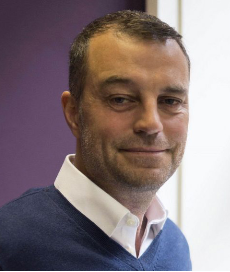
By way of introduction, my name is Mark Skinner and I am Head of Personal Insolvency at Farleys Solicitors LLP, which is based on Deansgate in the centre of Manchester. I am also a leaseholder in Beaumont Building in Manchester, which faces some of the problems I have outlined above so I understand the situation in which leaseholders are finding themselves.\
I advise people on their personal debt and try to find them a way to resolve their debt issues. I work with various large organisations, providing all debt and insolvency advice to their members including the Professional Footballer’s Association (PFA) as well as the Football Association (FA) and Rugby League Cares (RLC). I also undertake debt advice for members of various Police Federations up and down the country whose officers are experiencing financial difficulty and in need of some advice.

I understand that as a leaseholder you may be worrying about the increased costs needed in relation to remedial work for your building and are looking at ways to finance this by way of credit. This can often lead to financial difficulties and I want to offer my advice services free of charge to anyone who is experiencing these financial difficulties. Even if you want to chat about your current financial position and how you think things may be affected by taking on extra credit, I am happy to speak to you about this also.
There are always options available to individuals who are experiencing financial difficulties and I am happy to spend time talking through those options with any leaseholders affected by the problems we are all facing.
If, for example, you have had increased demands for payment due to cladding issues and you are struggling to juggle your creditors each month and make payments on time, there are options available. Creditors can be contacted and new monthly payments can be arranged: this can be done informally by contacting creditors individually or by way of a Debt Management Plan (DMP) or more formally through an Individual Voluntary Arrangement (IVA). If you contact me, I will be able to advise as to the best way forward for you. I can also explain the implications if you need to stop making payments or reduce payments to creditors on a monthly basis.
I want you to know that I am in the same boat as you and that free and impartial debt advice is available to you. All you have to do is give me a call on 0161 835 9513 or, probably easier for now as, like many of you, I am working from home, my mobile 07960 077 252. I can also be contacted through my email address mark.skinner@farleys.com. I understand the hardest part of dealing with problem debt is making the first phone call or contact; please know that you are not alone. Please don’t hesitate to contact me at any time to discuss things; I know I will be able to help you.

Having returned to the UK after spending many years living and working abroad, I thought I may have left it too late to own my own home. With limited funds, and somewhat nervous of the housing market, I thought shared ownership might be the way to go. And so when I saw adverts for a new, eco-friendly development in Hulme, Manchester, which included some shared ownership units, I thought it sounded perfect for me. The lovely-looking timber beckoned (‘Scandinavian’ rather than ‘combustible’, to my innocent mind) and I moved into my first home in 2006, after years of (often quite dodgy) rentals. The joy. You know how it is – creating your own space, buying your first brand-new stain-free sofa, curating your books on Billy bookshelves, hanging pictures from far-flung adventures on the wall, potting herbs on the sunny balcony.
But the clouds soon began to gather. I will gloss over the singular horrors of shared ownership – half the property, all of the financial liability, probably impossible to sell, difficult to rent out should I need to move. Then came the predators. Our freehold was purchased by unscrupulous profiteers bent on extracting as much money as possible from us while doing nothing to benefit the residents. After protracted legal battles, it seemed our best bet was to buy the freehold, which we did, and we naively thought that might be the end of our troubles.
That was before we began to understand the extent of the building and regulatory failures that have put our lives at risk and raised the spectre of bankruptcy. Yes – ‘lives at risk’, ‘bankruptcy’ – not phrases I would ever have expected to be using when I excitedly put down my precious deposit. That had come from my late dad, a hard-working joiner. I have problems with the sale of council houses as a policy, but I understood why my dad and many others went down that road. And then I benefitted from it when he passed away and left me enough for a deposit on a flat. He would have been thrilled to know he’d helped me buy a home at last.
The first line of the Hackitt Report (2018) has this to say about current building regulations: they are simply ‘not fit for purpose’. Builders were allowed to erect buildings with flammable cladding and create ineffective compartmentation between flats. They could install fire doors which were not fire doors and fire resistant glass which was not fire resistant. I am not absolving builders. As well as fire issues, we have serious leak issues, down to shoddy building no doubt. But this is clearly, at heart, a regulatory problem. And the government, who allowed this to happen, has a moral duty to put things right.
In February 2019, we were shocked to discover that the building which we live in did not comply with fire safety standards, and that we, the leaseholders have been hit with the bills of up to £25,000 per flat to cover the cost of fixing unsafe cladding and remedial fire breaks on our building.
Despite the government advice, the freeholders (Adriatic Land 3) are refusing to pay for the work and passing a bill of £1.6 million plus VAT (which could potentially rise) on to us residents.
After 18 months of mixed messages from the freeholder, a s20 notice was issued. This essentially gave us residents a deadline of 2/3 months for work to begin, which we would have to pay for. Fortunately, with the help of Manchester City Council, this was put on hold, but a couple of months later, we have been told that we may be forced to pay at any time.
Adriatic Land 3 is known to have links to the owners of our sister property Skyline Central 2 (Long Harbour Ltd). In 2014/15 a survey was carried out on the cladding of Skyline Central 2, which found issues and defects with the fire breaks and construction of the cladding. These issues are the same as found in the survey done for Skyline Central 1 and the issues that us leaseholders are now being asked to pay for in Feb 2019. However Skyline Central 2 never passed on this information to us at the time. If Skyline Central 2 had passed on the information in their 2014/15 survey to us at Skyline 1, we would have been in the NHBC 10 Year Building Warranty timeframe and the works would have been covered.
Construction of Skyline Central 1 was completed in 2006 by the developer West Properties (UK) Ltd. In July 2014 West Properties (UK) Ltd dissolved. The government are asking the developer’s to correct unsafe, poor standard work. However for us, like so many other buildings in the UK, due to them dissolving this is no longer possible and again the law is against us the residents…
Life today for Skyline Central 1 Residents…
After being told we’re living in a building which is just as unsafe as Grenfell, many of us are understandably suffering from huge stress and Mental Health issues. Loss of sleep, anxiety, fear of leaving electricity on and panic at hearing alarms going off are just a few of the issues that have become a daily routine for us. This is before the possible financial implications that we face are factored in.
On May the 9th, the government released a fund that they said will only be available to ACM (Grenfell-style) clad buildings, but buildings like ours, with just as unsafe cladding materials and faulty fire breaks, have been told they will not be covered. This “fund” will fix less than half of the unsafe fire-risk buildings in the country and has created a senseless Cladding Lottery! Tens of thousands of us are still left with not only the mental trauma of going to bed each night with the fear of a devastating fire; but also the anxiety of financial ruin to make our homes safe.
We simply cannot afford to pay this bill. Some of us have considered selling or remortgaging our property. However, this isn’t possible as lenders won’t provide mortgages on properties with cladding issues. We, as owners of these apartments are stuck; living in unsafe properties, which they can’t afford to fix, through no fault of their own and being told that our homes are close to worthless in value.
With support from other members of Manchester Cladiators (to which we are a part of), UKCAG and Inside Housing, us residents of Skyline Central 1 are also joining countless blocks around the country in calling on the government to End Our Cladding Scandal. We’re asking them to do the right thing and put a full fund in place to pay for all works to make unsafe private apartments safe to live in again.
We are all part of the same story and none of us should be left behind.
Twitter: @SkylineCentral1
Juliet's Story
What cladding means to me: an unmitigated and total disaster of epic proportions but with a tiny ray of light.
It all started when the Cladding regulations changed. I received a notification telling me the building I live in has dangerous cladding and this was compounded by a defective build and a negligent sign off. It seems as a tenant of the building who stupidly signed a lease this is all my liability. I needed to pay for a Waking Watch until a new alarm system was put in. I paid for the Waking Watch and new alarm system with difficulty and these were duly installed. Turns out the new system wasn’t good enough, my next bill for further works is expected to be 30 / 35K.
Although I should say that I am lucky. Some leaseholders have had to have new fire alarms installed and have to keep their walking wardens. Outrageous, why have they paid for a new alarm system then? I thought our Walking Wardens were extortionate at 18.5k a month but hearing what others are paying I again count myself lucky.
It appears this is an unprecedented situation where only a few people have the experience and qualifications to determine, approve and complete the remediation plan. These people are now very busy and so we are told we must accept we are looking at a wait of years not months in this frightening, dangerous and expensive situation. This is currently impacting anywhere between 600,000 and 5 million people although many don’t yet realise they are impacted, the figures continue to grow almost daily.
I worry that I am not sure if it is a good thing or a bad thing that our cladding report says our building is a “High Priority”. Should I be glad the build is so defective that we might get help or worried that we are living in such terrible risk.
Meantime I live with the constant fear of fire and have had to change my lifestyle, no more scented bath times candles for me as this is too risky. No barbecue on the roof terrace, too risky.
I no longer live in a fantasy world where injustice is remedied. My awareness that everyone who I thought would help and support me has actually other priorities has been devastating. The support systems I had thought would step up and didn’t are now on my naughty list, they include the Freeholder, the Management Company, Bellway the initial builder, the Local Council, Housing Minister, Government, Insurance Company. I can just hear people saying,
“But the local council are in talks with you and the government gave you 1 billion”.
Just stand in my shoes and see if that is enough. I deliberately left politicians off my naughty list as although many have been very slow to engage and frankly, unhelpful, some have been outstanding.
I am unable to sell or move, no one in their right mind would want to buy a leasehold property until this debacle has been fixed. The “fleecehold” scam is too profitable for the Freeholders so I guess it’s here to stay. As soon as I can I will sell and move on, I will take a drop in price and count myself lucky to get away before the next “fleecehold” disaster hits.
Insurance companies are on my naughty list, it turns out our ‘All Risks Policy” didn’t cover this risk. We are hearing about outrageous hikes in insurance costs, but my contents company advise cladding related issues are not covered anyway. What are the government doing to protect us, hmm not sure they are doing anything.
I worry about the removal and remediation of cladding. I trusted the architects, builders, surveyors, material/product designers & manufacturers and building control who were part of the initial build and have been proved foolish to have done so. Do I just have faith things will be better this time? The problem is that my eyes have been opened and I no longer have faith. My newly developed scepticism will conflict with the people who can force me to pay these huge life changing sums of money. Do I decide to just do as I am told and take their loans so I can pay or just back out and go bankrupt and escape their clutches? Going bankrupt would remove the ever-present worry about money that ruins my sleep and health, although the good news is that I have lost a lot of weight during this process and I love that my clothes are falling off. The miracle cladding diet, effective, but not to be recommended.
I reserve the top place on my naughty list for myself. How was I so stupid that I signed a lease where the freeholder can charge me for solicitor’s expenses incurred finding out how to squeeze money out of me. I voluntarily signed away all my rights, control and power and to think that I had a life previously where I actually owned my own property and just gave it all away. I hate myself for making the stupidest mistake of my life by buying a leasehold property. I have put my life at risk and ruined my financial stability, and unless I can sort it out will be leaving my kids debts. I have accepted the painful reality that I didn’t buy a home I just bought a tenancy and have zero rights.
I worry about everything now that my blinkers are off. I worry about the close relationship between the government and the construction industry and how that impacts me (i.e. permission to extend height of buildings means my top floor flat can change at any time with no consultation). I will lose a fortune, again, the price of freeholds will go up as they will have “potential” so we will never be able to buy them. The freeholder who bought the building for a small percentage of its value will make a profit, the council will get more council tax, the construction industry will get work and I will probably be charged for new lifts etc because I signed that flaming lease.
I worry that keeping my life safe has to fit into other political scenarios and a creeping awareness that my life has less value than funding new homes, repairing flood victims, and broadband users is keeping me up at night.
I even worry about the height of the building I live in, some documents show we are “about 18m”. I think I can let this one go as we only have 6% cladding and the rest of our bill is for remediating a defective build that had a negligent sign off and this isn’t covered by the government’s funding package anyway. The 6% of 30/35k is about 2k so I don’t think it’s even worth applying to the governments funding allocation and jumping through their hoops and restrictions for 2k each.
I worry as I know we can’t all pay the bills that are falling on us. We will not be able to go ahead with the remediation without 100% compliance from the leaseholders, this is not going to happen. We are airily told, oh the banks will repossess and will become liable for these debts, or the freeholder will have to pay. It is my experience thus far that neither of these will happen as their solicitors will find a way to make them exempt.
I am worrying that those not personally involved in the cladding crisis still don’t understand the scale of the issues. For me cladding is an umbrella terms that stands for all aspects of the wider cladding crisis but worry that those not intimately involved think it literally means cladding. I worry that this is why the government are acting as if it’s OK to keep our lives at risk indefinitely and to risk our mental health in this callous and uncaring way. I hear outsiders say “why should tax payers money sort out private flats”, I hear conversations where it’s clear some think cladding just means flammable cladding that needs removing, I heard someone say that Leeds is small so only has 13 buildings with cladding related issues. The misconceptions surrounding the cladding crisis are legion and I worry about what more can be done to highlight the true scale of this crisis. We have had such fabulous exposure on TV, in the news media, in Social Media that I worry what else, apart from another devastating fire that no one wants, can do more.
I worry about how to find a way around the secrecy and confidentially issues that prevent me from knowing who the other leaseholders in my building are. We need to talk to each other and work together but the lease, management company rules, data protection regulation are all designed to prevent us from contacting each other. We face barriers at every step towards helping ourselves. In my case we tried a Facebook page but for whatever reason it didn’t take off. I have now set up a group chat on messenger and we have 10 people on it so far, only another 171 to go. More sleepless nights planning how to find and engage more residents. During the process of finding these ten leaseholders I have met another three who do not want to engage as they admit to “burying their heads in the sand” as their mental health is shot and they can’t face the reality of our situation, my heart breaks for them, especially when one talked to me on this one occasion but asked not to be contacted again as an old mental health issue had returned. Another three don’t use Facebook so can’t engage with the chat. However, the good news is that we have 10 on the group chat which is ten more than we had before.
I worry that if we do miraculously resolve all the remediation works in a timely way the debacle of the EWS1 will be there to create a further barrier to moving on. I worry that the EWS1 situation will be resolved way before our remediation as it is likely going to take years to remediate our block.
Now I am worrying if this is too negative and will just depress people further who are already low, I don’t want to add to my fellow cladders burdens so will end on a strong positive. Thank the lord for the support groups that have sprung up, in particular Manchester Claddiators, who have kept our spirits up when we are down, they have given us back our hope when we were lost. They inspire us to keep trying and not give up. Manchester Claddiators, and other voluntary support groups, are often our only source of information and have stepped into the vast empty wilderness where paid professional bodies should be. They have been places, engaged with people and created a vibe that individually we could not have done and it is specifically thanks to them that we have been allocated the extra funding of 1 billion. They have found amazing allies who also give us strength and to whom we are also eternally thankful, such as the awesome Mr Hilary Benn. Finally, Manchester Claddiators know not enough has been done and that whole groups of victims are still excluded from support and have stated they will stand with us until this whole crisis is resolved. I believe these people who fight for something because it’s right should be our next politicians and leaders.